
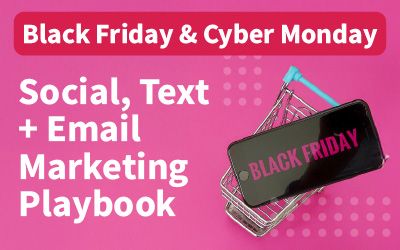
Black Friday & Cyber Monday 2025: The Complete Social, Text + Email Marketing Playbook
Last year, Black Friday online sales hit $9.8 billion. Cyber Monday? $12.4 billion. But here’s what most marketing blogs won’t tell you: 67% of those sales went to brands that started their campaigns before November 1st.
If you’re reading this in October, you’re already behind—but not too late. This isn’t another listicle of “post more on social media” advice. This is a strategic playbook for marketers who understand that BFCM success requires orchestrated chaos across every channel you own.
The Multi-Channel Reality: Why Single-Platform Strategies Fail
The average consumer will see 3,000+ promotional messages between November 20th and November 27th. Your campaign won’t win on volume—it wins on timing, sequencing, and channel coordination.
The data tells a clear story:
Email drives 28% of BFCM purchases but has an open rate of just 18% during peak season
SMS boasts a 98% open rate but converts best when sent within 4-hour windows
Social media creates discovery and urgency, but requires 15-20 touchpoints before conversion
The brands that win? They don’t pick channels. They synchronize them.
Phase 1: The Pre-Game (Oct 15 – Nov 15)
Build Your Segmentation Architecture
Action Item: Create behavioral segments now, not later.
Segment your audience across all three channels:
VIP Buyers (purchased 3+ times in 12 months): Early access, exclusive offers
High-Intent Browsers (added to cart, didn’t purchase): Abandoned cart sequences with time-sensitive triggers
Engaged Non-Buyers (opened 5+ emails, clicked 3+ times): Education-first content that builds trust
Cold List (no engagement in 90+ days): Reactivation campaigns with low-commitment offers
SMS-Specific Tactic: Send a single opt-in confirmation message in late October: “Want first access to our Black Friday deals? Reply YES for text alerts.” This primes your list without burning them out.
Social Media Strategy: Launch a “Sneak Peek” campaign with intentionally obscured product images or countdown graphics. Schedule 3 posts per week across your main platforms. Use platform-specific features:
Instagram: Stories with poll stickers asking what deals they want to see
LinkedIn: Thought leadership posts about preparing for Q4 shopping trends
TikTok: Behind-the-scenes content of your team prepping for BFCM
The Content Bank Approach
Create your entire BFCM content calendar now. You need:
45-60 social media posts (15-20 per platform minimum)
12-15 email templates (pre-sale, main event, last chance)
8-10 SMS messages (time-sensitive triggers only)
AI Integration Hack: Utilize AI to generate multiple variations of each message, then refine the top performers manually. Create 5 versions of each email subject line, A/B test the AI-generated options against your human-written controls in early November to see what resonates.
Pro Tip: Schedule everything in batches using a unified platform. When you’re managing 60+ posts, 15 emails, and 10 SMS campaigns, logging into 6 different tools is how mistakes happen. One scheduling dashboard = one source of truth.
Phase 2: The Early Bird (Nov 16 – Nov 23)
The Soft Launch Strategy
Most brands make the mistake of going silent before the main event. The winners? They build anticipation.
Day-by-Day Breakdown:
Nov 16-17 (Weekend):
Email: “Here’s What’s Coming” teaser with vague product categories
Social: User-generated content showcasing previous BFCM purchases
SMS: Silent (save your ammunition)
Nov 18-20 (Mon-Wed):
Email: VIP-only early access announcement (even if early access is just 2 hours before public launch)
Social: Countdown posts with specific deal reveals (1 per day)
SMS: Single message to VIP segment only: “You’re getting early access. Details dropping Friday at 9 AM.”
Nov 21-23 (Thurs-Sat):
Email: Full campaign reveal with shopping guides (“The $500 Gift Guide,” “Gifts Under $50”)
Social: Ramp to 3-4 posts daily with heavy Story/Reel usage
SMS: Reminder to high-intent browsers about early access timing
Critical Timing Detail: Schedule your VIP early access for Friday at 6 AM ET, not midnight. Sleep-deprived impulse purchases have higher return rates. Morning shoppers are strategic buyers with higher lifetime value.
Phase 3: The Main Event (Nov 24 – Nov 27)
Black Friday (Nov 24): The Blitz
This is where channel synchronization becomes non-negotiable.
6:00 AM – The Early Bird Launch
Email #1: VIP-only early access with unique discount code
Social: “Early access is LIVE” post across all platforms
SMS: High-intent browsers only: “Your exclusive deal is live for the next 3 hours: [LINK]”
9:00 AM – Public Launch
Email #2: Main list announcement
Social: Organic posts + paid ads go live
SMS: Broad list announcement with urgency framing
2:00 PM – Midday Push
Email #3: “Best Sellers Flying Off Shelves” with social proof
Social: Customer testimonial content, unboxing videos
SMS: Cart abandonment trigger for anyone who added items between 9 AM-1 PM
8:00 PM – Evening Reminder
Email #4: “Hours Left” urgency play
Social: Final call posts with scarcity messaging
SMS: Only to the VIP segment with an extended deadline or a bonus offer
Cross-Channel Consistency Rule: Your discount codes, messaging, and creative should be consistent across all channels. Seeing “BFNOW40” in an email but “BLACKFRIDAY” on social creates confusion and kills conversions.
Small Business Saturday (Nov 25): The Relationship Play
While big retailers dominate on Friday, Saturday is your chance to connect on an emotional level.
Content Strategy:
Email: Story-driven content about your brand mission, team, or origin story + continued sale messaging
Social: Behind-the-scenes content, team introductions, community focus
SMS: Light touch—single message with “support small business” angle
Action Item: Partner with 2-3 complementary small businesses for a collaborative giveaway. Cross-promote on social and email. This builds your list while offering value beyond discounts.
Cyber Monday (Nov 27): The Digital Domination
Monday converts differently from Friday. Shoppers are at work, browsing on their desktops, looking for various products.
9:00 AM – Work Break Window
Email #5: “NEW deals just dropped” with fresh inventory or a different discount structure
Social: Desktop-optimized content (carousels, link-heavy posts)
SMS: “Monday-only deals” to combat deal fatigue
12:00 PM – Lunch Hour Blitz
Email #6: “Deals ending tonight” with countdown timer
Social: Stories/Reels showing real-time inventory updates
SMS: Cart abandonment sequence for morning browsers
5:00 PM – Commute Time
Social: Mobile-optimized content for phone scrollers
SMS: Final call message to unopened email subscribers
9:00 PM – Last Call
Email #7: “Final Hours” with literal countdown
Social: Last chance posts across all platforms
SMS: Only to cart abandoners and high-intent segments
Phase 4: The Aftermath (Nov 28 – Dec 5)
This is where amateurs stop and professionals capitalize.
The Extension Play (Nov 28-29)
Action Item: Extend deals for “anyone who missed it,” but reframe the messaging.
Email: “We extended it” with a different creative angle
Social: Customer testimonial content from BFCM purchases
SMS: One-time “extended by popular demand” message
The Winback Sequence (Nov 30 – Dec 5)
Segment-Specific Campaigns:
For buyers:
Email: Thank you sequence + “complete the look” recommendations
Social: Reshare their tagged posts and UGC
SMS: Delivery updates and satisfaction check-in
For engaged non-buyers:
Email: “You missed out” curiosity campaign with wait-list for next year
Social: Social proof content showing what they missed
SMS: Single survey message: “What stopped you from buying?”
For non-openers:
Email: Re-engagement campaign with subject line: “Did we end up in spam?”
Social: Retargeting ads to social followers who didn’t convert
SMS: No additional messages (respect the silence)
The Technical Stack: How to Actually Execute This
Here’s the uncomfortable truth: This playbook requires serious operational horsepower.
The Traditional Approach:
Hootsuite for social scheduling
Mailchimp for email
Twilio for SMS
Google Sheets for tracking
Slack for team coordination
Calendar for campaign timing
That’s six platforms, six logins, six dashboards, and infinite room for things to fall through the cracks.
The Unified Approach:
Platforms like Pollen Social consolidate your entire operation into one command center. Schedule social posts, trigger email sequences, and send SMS campaigns from the same dashboard where you’re using AI to generate content variations.
Why This Matters During BFCM:
When you’re executing 15 campaigns across 3 channels simultaneously, switching between tools isn’t just inconvenient—it’s a liability. You need to see your entire campaign architecture in one place to catch conflicts, coordinate timing, and make real-time adjustments.
AI-Powered Efficiency:
Instead of writing 60 social posts manually, generate variations with AI and edit the winners. Instead of A/B testing subject lines blindly, let AI analyze your historical data and suggest high-performing options. The time savings? 15-20 hours per campaign.
Advanced Tactics: The 10% Edge
1. The Dynamic Discount Strategy
Static discounts are leaving money on the table.
Action Item: Create tiered discount codes based on cart value:
Orders $50-$100: 20% off
Orders $100-$200: 25% off
Orders $200+: 30% off + free shipping
Communicate this in your email and SMS messaging with specific language: “Your cart qualifies for 25% off—add $15 more for 30%”
2. The Countdown Hack
Add literal countdown timers to emails and social content, but make them channel-specific.
Email timers: Countdown to deal expiration
Social timers: Countdown to next product drop
SMS timers: Countdown to cart abandonment code expiration
Different urgency triggers = different conversion psychology.
3. The Inventory Transparency Play
Real-time inventory updates create genuine FOMO.
Social Media: “Only 12 left in stock” on product posts
Email: “Running low” flags on best-seller products
SMS: “Back in stock” alerts for previously sold-out items
Tools to use: If your e-commerce platform integrates with your marketing tools, automate inventory-triggered messages. When stock hits 20 units, trigger an urgency email. When it sells out, trigger a waitlist SMS.
4. The Post-Purchase Upsell
Don’t stop at the sale.
Immediate post-purchase sequence:
Email #1 (sent immediately): Order confirmation + “complete the look” recommendations
Email #2 (sent 24 hours later): “You might also need” complementary products
SMS (sent 48 hours later): “One more thing” final offer before deals end
Average uplift: 12-18% additional revenue from buyers who just converted.
5. The Micro-Moment Strategy
Target specific behavioral triggers with channel-specific responses.
Trigger → Response:
Cart abandonment < 1 hour → SMS
Cart abandonment 1-24 hours → Email
Cart abandonment 24+ hours → Social retargeting ad
Product view, no cart add → Email with product details
Email click, no purchase → SMS with time-sensitive offer
Action Item: Map out 8-10 behavioral triggers and assign channel-specific responses. Build these workflows in advance so they run automatically during the chaos.
The Metrics That Actually Matter
Forget vanity metrics. Here’s what you’re measuring:
Revenue Metrics
Revenue per channel (email vs. SMS vs. social)
Revenue per message (total revenue ÷ number of messages sent)
Average order value by channel
Revenue per subscriber/follower
Engagement Metrics
Email open rates by segment (not overall—that’s useless)
SMS response rates (replies indicate engagement quality)
Social engagement rate (comments + shares, not just likes)
Click-through rate by channel
Operational Metrics
Time to create campaign (how long did setup take?)
Number of platform logins required (measures operational friction)
Campaign deployment errors (wrong link, wrong time, wrong segment)
Behavioral Metrics
Multi-channel engagement rate (users who engaged on 2+ channels)
Channel sequence impact (did email → SMS → social work better than social → email → SMS?)
Abandonment recovery rate by channel
Action Item: Create a live tracking dashboard that updates hourly during BFCM weekend. Share it with your team so everyone can see what’s working in real-time and adjust accordingly.
The Real Talk: What Usually Goes Wrong
Problem #1: Message Fatigue You send too many messages, people unsubscribe, and your list shrinks when you need it most.
Solution: Respect frequency caps. No more than 4 emails and 3 SMS messages per subscriber from Nov 24-27. Use social media for the high-frequency touchpoints.
Problem #2: Channel Conflicts You accidentally send the same discount code to VIPs and the general list at the same time, destroying the “exclusivity” positioning.
Solution: Use unique codes per segment and schedule campaigns with at least 2-hour gaps between VIP and general sends.
Problem #3: Technical Failures A link breaks, a code doesn’t work, or an email deploys to the wrong segment.
Solution: Test everything in a live environment 48 hours before launch. Send test campaigns to yourself on both mobile and desktop devices.
Problem #4: Inventory Mismatches You promote a product that sells out in 2 hours, then keep promoting it for 2 more days.
Solution: Build inventory triggers into your campaign workflow. When a product reaches zero, it is automatically removed from promotional rotation.
The Bottom Line
BFCM isn’t won in November. It’s won in October with preparation, in November with execution, and in December with follow-through.
The brands that treat this as a weekend flash sale leave money on the table. The brands that treat it as a 6-week revenue engine with orchestrated touchpoints across email, SMS, and social? They’re the ones hitting record numbers while everyone else wonders what happened.
This playbook gives you the strategic framework and tactical execution plan. Now you need the operational efficiency to actually pull it off. Because when you’re managing 15 campaigns across 3 channels with real-time adjustments and time-sensitive triggers, the difference between success and chaos is often just the tools you’re using to execute.
The question isn’t whether you’ll run a BFCM campaign. The question is whether you’ll run it with the precision and coordination it deserves.
About Pollen Social: Pollen Social is the unified marketing platform that lets you schedule social media, automate email campaigns, send SMS messages, and use AI to generate content—all from one dashboard. Learn how to orchestrate your next campaign with less chaos and more results at pollensocial.com.
Ready to transform your
social media strategy?
Join thousands of marketers who trust Pollen Social to manage their social media presence.